Submersible pump motors are crucial components in various applications, from residential water supply to industrial operations. Recognizing and understanding the motor flange of a submersible pump motor is essential for proper installation and maintenance. In this article, we'll provide a concise guide to help you identify and work with motor flanges effectively.
What is a Motor Flange?
A motor flange is a flat, usually circular, component located at the base of a submersible pump motor. It serves as a connecting point between the motor and the pump housing, ensuring a secure and watertight seal. The motor flange typically has bolt holes that align with corresponding holes on the pump housing, allowing for secure fastening.
Recognizing the Motor Flange: Steps to Follow
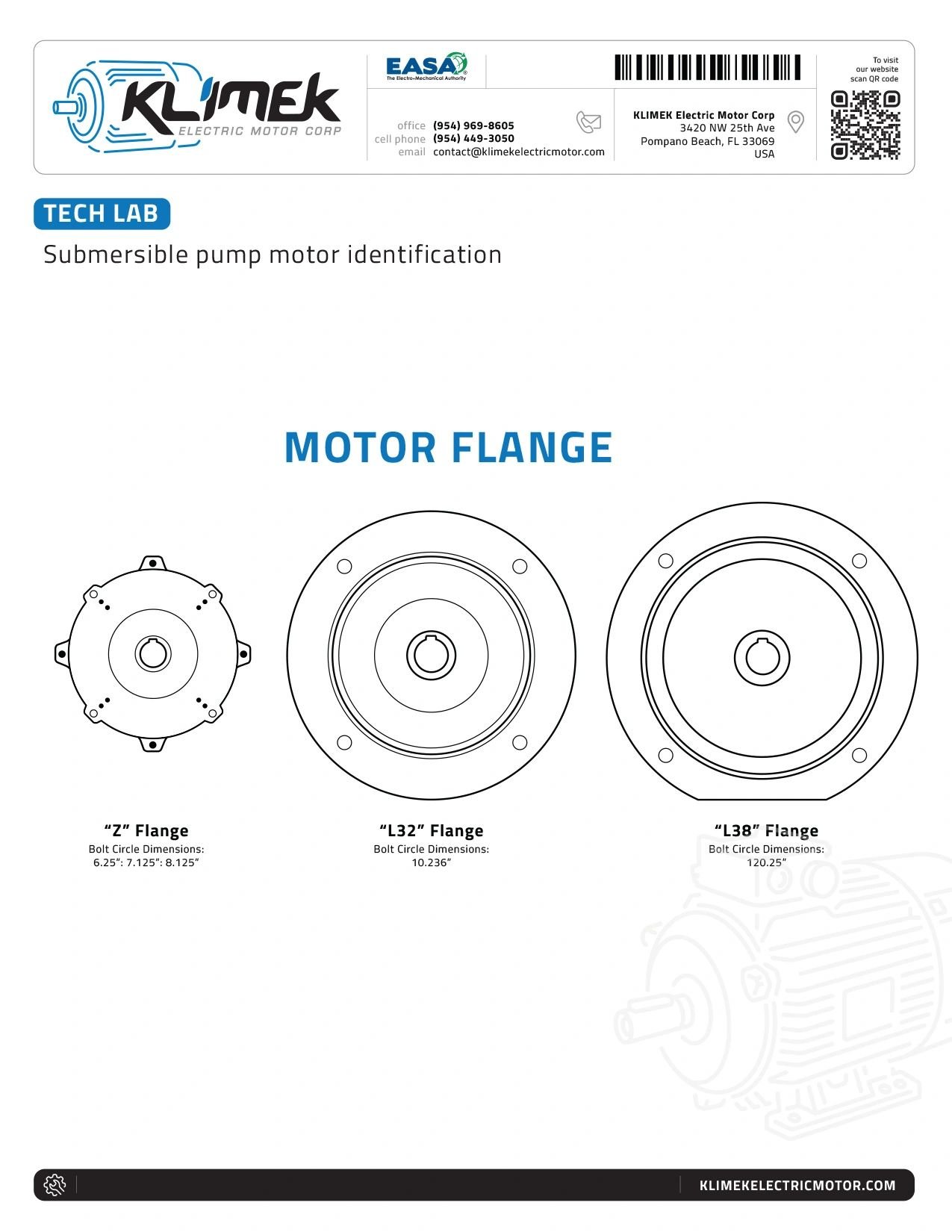
Size and Shape: The motor flange is often slightly larger than the motor itself and has a circular shape. Measure the diameter to ensure compatibility with the pump housing. Submersible pump motor flange type names: Z-Flange, L32-Flange and L38-Flange
Bolt Holes: Examine the motor flange for bolt holes. These holes facilitate the attachment of the motor to the pump housing. Count the number of bolt holes and measure their spacing to match with the pump housing.
Position: The motor flange is located at the bottom of the motor, where it connects to the pump. It's important to correctly align the flange with the corresponding recess on the pump housing.
Materials: Motor flanges are typically made of durable materials such as stainless steel or cast iron to withstand the demands of submersion and water pressure.
Gasket or Seal: Some motor flanges come with integrated gaskets or seals to ensure a watertight connection. Check for the presence of a sealing element.
Proper Installation and Maintenance
Correctly recognizing the motor flange is crucial during installation and maintenance procedures. Here are some guidelines to ensure proper practices:
Conclusion
Recognizing the motor flange of a submersible pump motor is essential for seamless installation and reliable operation. Understanding its size, shape, bolt hole configuration, and positioning ensures a secure connection between the motor and the pump housing. By following proper installation and maintenance practices, you can ensure the longevity and efficiency of your submersible pump system.